Sign: attached concrete
A porch, steps or pool deck pulling away from the house
Entry porches, steps, driveways, patios and pool decks are usually poured after the house, as separate pieces of concrete on shallower ground. They settle on their own schedule, and the joint where they meet the wall is where it shows.
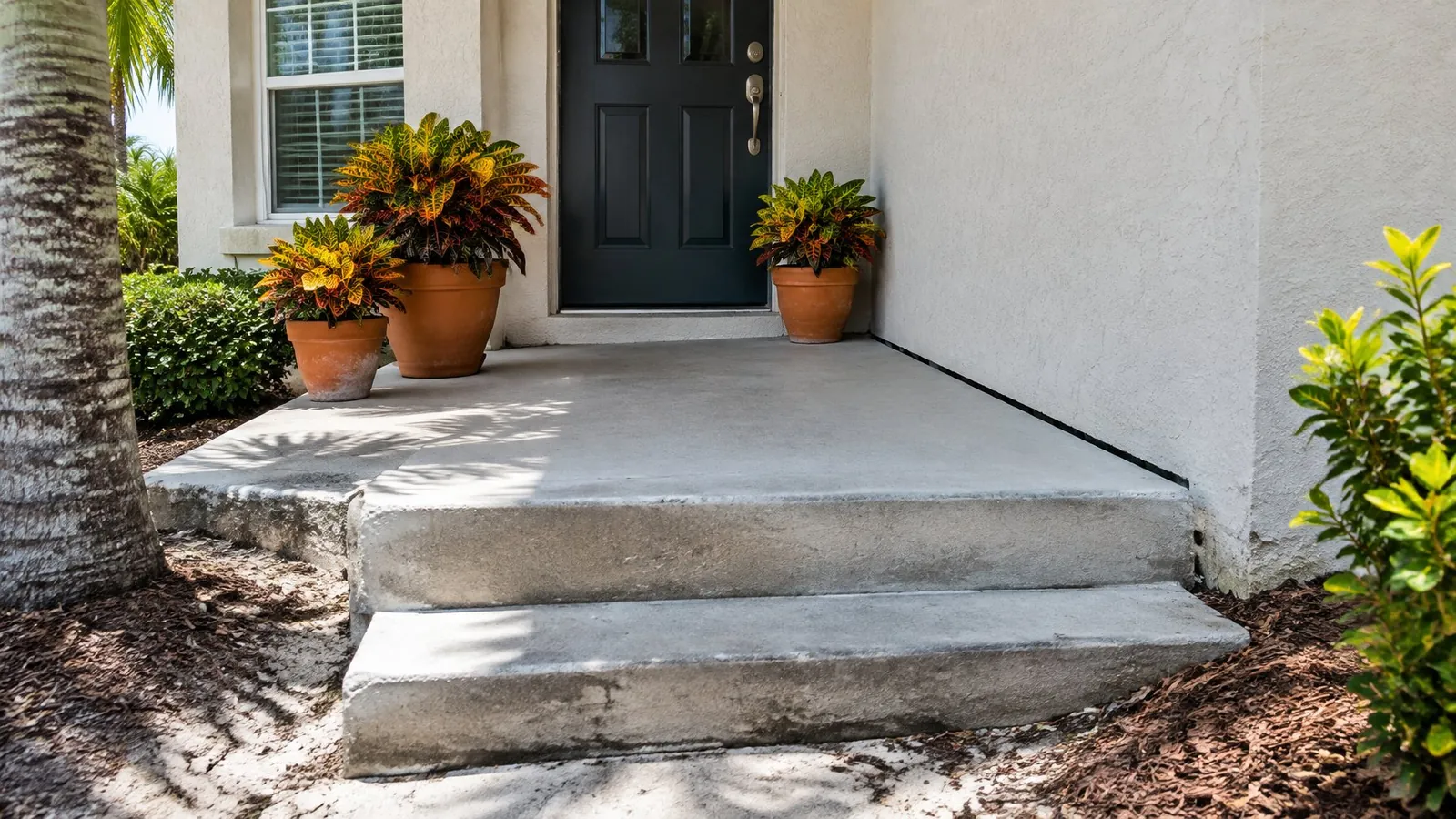
What to look at
Check the joint first. A gap that is even from end to end means the slab has slid or shrunk away. A gap that is wide at one end, or a slab that now tilts, means one edge has dropped.
Then look at the house wall behind it. If the stucco and the door threshold are undisturbed, the house has probably stayed put and only the attached slab has moved. If the wall is cracked at the same spot or the threshold has tilted with the porch, both may be moving together.
A porch with its own roof needs more care. The columns carry weight, and a column base that has sunk pulls on the roof framing above it.
What moved, and whose work it is
| What moved | Usual cause | Who repairs it |
|---|---|---|
| Entry steps or stoop tilting | Shallow base on loose sand; roof water landing beside it | Foundation repair or concrete lifting company |
| Patio or lanai slab dropping at its outer edge | Fill settling; soil washing out under the edge | Concrete lifting company, or a concrete contractor if it has to be replaced |
| Covered porch column sinking | A small footing under a concentrated load | Foundation repair company, often with a pier under the column |
| Pool deck cracking or sinking | Fill around the pool shell settling | Concrete lifting company; a pool contractor if the shell or its pipes are involved |
| Driveway slab pushed up | Tree roots | Concrete contractor, with an arborist's advice on the tree |
Why it matters beyond looks
A slab that tilts toward the house sends rain to the wall instead of away from it. On sandy ground that water can wash out support for the house footing, so a cosmetic problem can grow into a structural one. A raised edge at a door people use every day is also a trip hazard.
The usual repair is to drill small holes through the slab and pump material underneath until it rises back into place. Expanding polyurethane foam and cement-based grout are both used. A sunken porch column may get a pier. A screen enclosure bolted to a pool deck may have to be loosened first, so mention one if you have it.
Porch and deck questions
The gap at my front steps is small. Should I caulk it?
A flexible sealant in the joint keeps water from running down behind the steps, which is sensible. Measure the gap at both ends and write it down first, so you will know if it widens.
Does a sinking pool deck mean a sinkhole?
Not by itself. Soil placed around a pool after it is built often keeps settling. A depression that is growing, cracks in the ground or a pool that is losing water are reasons to stop using the area and have it looked at. The sinkhole guide lists the signs the state geological survey gives.
Ready to have the house looked at?
Only someone standing at the house can tell you what is going on under it. Call, explain what you have noticed, and ask for an inspection.
Describe the problem, book an inspection
Say where the cracks or dips are and when you first saw them. The independent local foundation repair company you reach can set a time to look at the house.
Call (407) 598-8829The call may be recorded. See how referrals are paid for and what happens to your details.